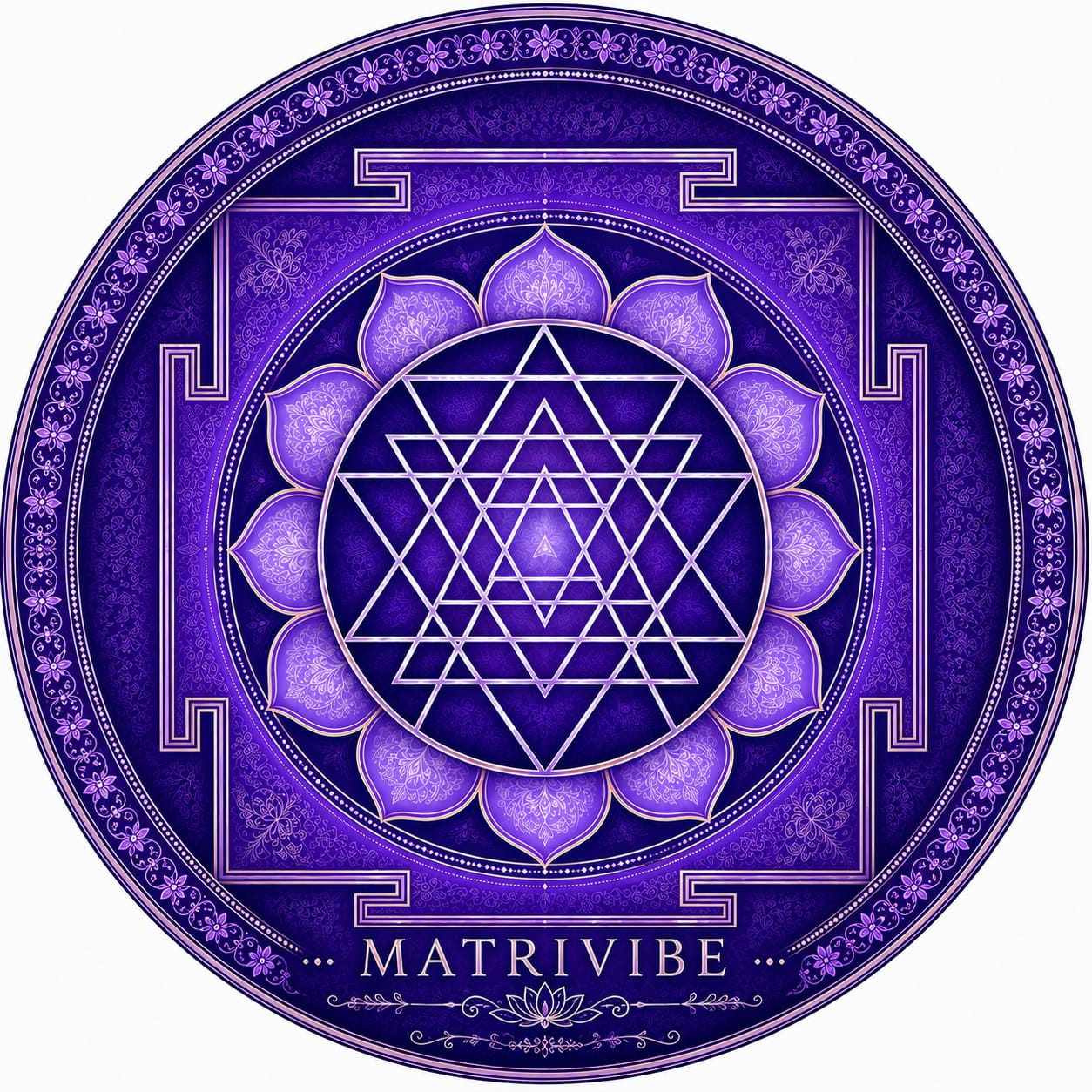
Kali Kula and Sri Kula are useful orientation labels, but neither identifies one uniform institution. Their meanings shift across region, lineage, period, and author.
Different centres of gravity
Kali-centred traditions can emphasise time, transformation, fierce compassion, immediacy, and forms of Shakti that confront limitation directly. Sri Vidya-centred traditions place Lalita Tripurasundari and Sri Chakra within an exacting system of mantra, worship, cosmology, and contemplative theology.
These descriptions indicate centres of gravity, not rigid boundaries. Kali is not without beauty or compassion; Lalita is not merely gentle or worldly. Both can be understood as supreme Devi.
Why the popular contrast fails
Calling Kali Kula “dark and dangerous” and Sri Kula “safe and pleasant” imports modern aesthetics into complex traditions. Fierce iconography can communicate liberation, protection, impermanence, and non-duality. Auspicious iconography can belong to highly demanding ritual and contemplative systems.
Shared concerns
Both wider worlds may value mantra, deity worship, initiation, teacher–student transmission, disciplined conduct, and a sacred understanding of body and cosmos. The actual forms and requirements are lineage-specific.
Choosing is not a personality test
A preference for a visual form is not enough to select a formal path. Begin with study and honest motivation. If formal practice is sought, discuss readiness, existing commitments, and the exact tradition through which guidance is offered.
Frequently asked
Can I practise both?
Traditions differ. Some lineages integrate multiple transmissions; others maintain specific sequences and boundaries. Do not combine mantras or procedures independently.
Which is better for beginners?
Public education and devotion may be accessible in both. Formal suitability depends on the practice, lineage, teacher, and seeker—not a broad label alone.